THE SPECIALTY ITEM KINGS OF TEXAS
Restaurant and Commercial Kitchen Movers — Full Service
Commercial kitchen relocations across the Austin metro and the Permian Basin built around walk-in coolers, hood systems, sealed flooring requirements, and the opening night you've already taken reservations for.
By the numbers
2,200+
Five-Star Reviews
6
Texas Locations
7 yr
Avg. Mover Tenure
Same-Day
Written Estimate
What this looks like
The operational reality.
A restaurant move is six trade-coordinated jobs on a single timeline: the gas-line disconnect and reconnect, the plumbing for ice makers and three-compartment sinks, the electrical for hood fans and high-amperage equipment, the refrigeration for the walk-in cooler and freezer, the floor and ceiling protection because the new space is on health-code review, and the actual physical move of the equipment between buildings.
We handle the move. We coordinate the trades. We don't certify the gas, the plumbing, or the electrical — those require licensed third-party contractors — but we sequence them into the move calendar so the kitchen reopens on schedule.
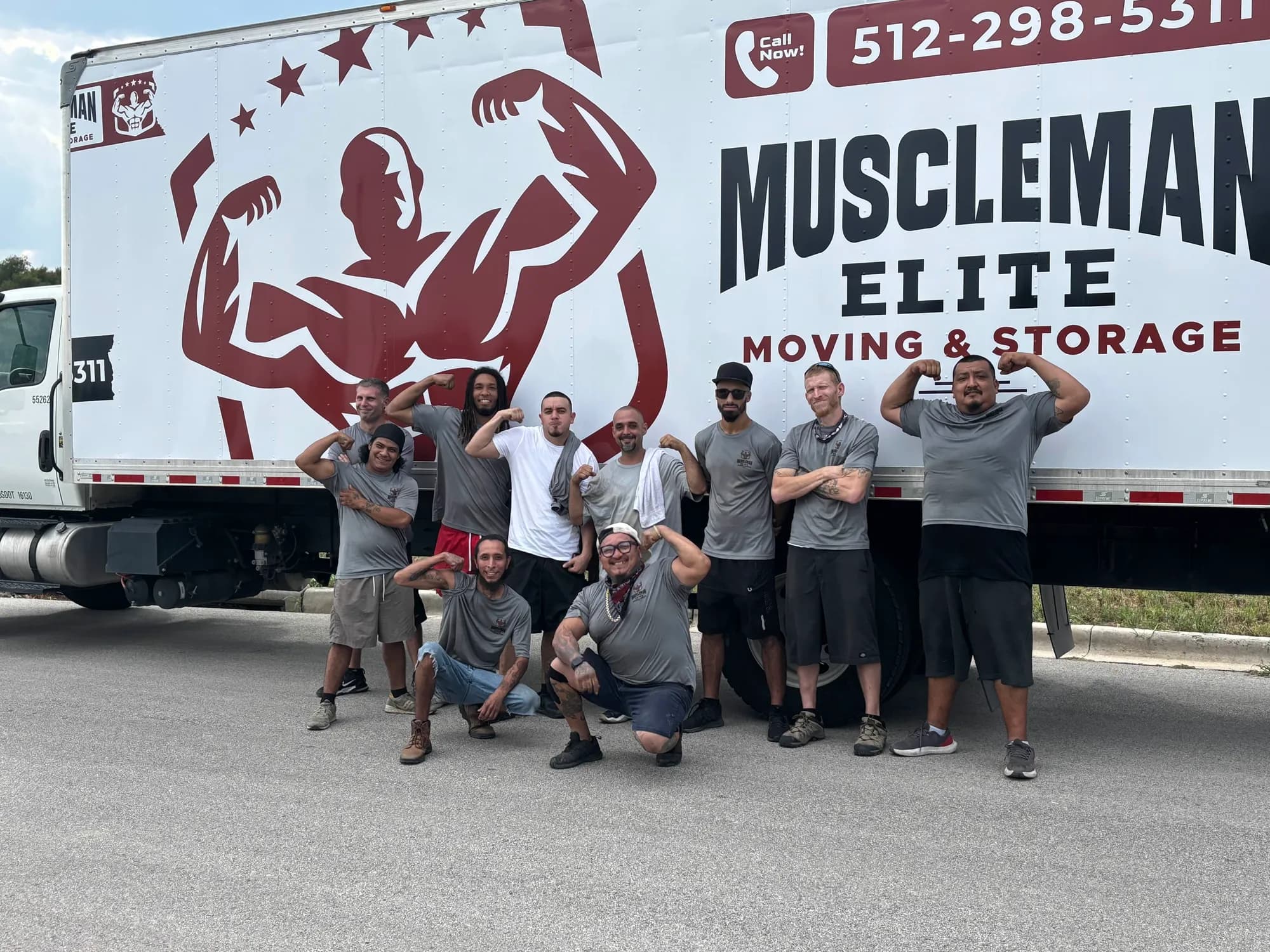
Muscleman Elite runs restaurant, bar, café, food-truck commissary, and commercial kitchen relocations across the Austin metro and the Permian Basin for independent operators, restaurant groups, ghost kitchens, brewery and taproom buildouts, and catering and event-kitchen operators. Local moves bill hourly with a 2-hour minimum, prorated in 15-minute increments after the minimum. You always get a written estimate before the move.
What makes this hard
Not a generic move.
Walk-in coolers and freezers are buildings, not appliances. A walk-in is panelized — insulated panels with cam-lock connections, a refrigeration condenser unit usually on the roof or pad-mounted outside, copper line set running between the two, an evaporator unit inside, and floor panels that may or may not be tied to the slab. Disassembly is panel-by-panel in the documented sequence. The condenser unit and line set are refrigeration-trade scope — we coordinate the refrigeration contractor's schedule, we handle the panel disassembly and transport, they handle the refrigerant recovery and the reconnection.
Gas lines are licensed-contractor scope, full stop. Gas ranges, fryers, char-broilers, salamanders, conveyor ovens, combi ovens, water heaters with gas — every one of these has a gas connection that must be disconnected by a licensed plumber or gas fitter at the old location and reconnected and pressure-tested at the new location. We do not certify gas. We coordinate the plumber's schedule into the move calendar.
Hood and exhaust systems are bigger than they look. Type I hoods over cooking equipment, the ductwork through the roof, the rooftop exhaust fan, the make-up air unit, the fire suppression system (Ansul, Pyro-Chem, Amerex) — these are interconnected. A hood relocation is rarely a simple unbolting. The fire suppression has to be drained, tagged, and re-certified by the fire suppression vendor. The duct system often has to be inspected for grease accumulation before relocation. We move the hood components; the hood mechanical scope and the suppression re-certification are specialty-trade scope.
Sealed-floor protection is a health-code issue, not a courtesy. Commercial kitchens require sealed flooring (quarry tile, epoxy, sealed concrete) to pass health code. The new kitchen has either passed inspection already or is on a scheduled inspection. Heavy equipment dragged across an unsealed or newly-sealed floor can cure-time-damage the surface — that's a failed re-inspection. Floor protection is non-negotiable on a kitchen move.
Grease and drainage protocols matter. Fryers, grease traps, char-broilers, hood-system drain pans — these don't just get tipped and rolled out. Hot grease is a burn hazard. Cold grease in a trap is a slip hazard and a sanitation issue. Drain-down, contain, dispose through the grease hauler — handled before the equipment moves, never on move day.
“The moves other movers refer out — pianos, gun safes, hot tubs, antiques, fragile lab equipment. Those are our standard jobs.”
— Mike Stackable, Founder
How we handle it
The process.
1. The walkthrough at both kitchens. A move planner walks the closing kitchen and the new kitchen. We photograph every piece of equipment, document gas connections, electrical service, plumbing tie-ins, and the layout of hood, walk-in, and refrigeration runs. We get contractor contacts from your operations side — the plumber on the gas, the refrigeration tech for the walk-in, the hood vendor, the fire suppression vendor.
2. The written estimate. Itemized by labor category, by equipment type, by trade-coordination scope. Premium for after-hours and weekend windows. Pricing for sealed-floor protection scope. No verbal-only quotes.
3. COI submission for both landlords. Restaurant landlords — restaurant-row strip centers, mixed-use lifestyle centers, food halls, ghost-kitchen operators — almost all require COIs. Standard turnaround 24-48 hours from the time we have the building's underwriting requirements in writing. USDOT 2105156, TxDMV 006568203C.
4. The trade-coordination calendar. The single most important deliverable on a restaurant move. We build the calendar against your reopening date. Gas disconnect at the old kitchen by your plumber on day 1. Refrigeration recovery on the walk-in on day 1 or 2. Hood and ductwork disassembly on day 2. Equipment move on day 2-3. Floor protection at the new kitchen day 3 or before. Equipment placement day 3. Gas reconnect and pressure test by your plumber day 4. Refrigeration recommissioning day 4-5. Fire suppression re-certification by the suppression vendor before opening. Health-code re-inspection where the new kitchen is on inspection.
5. The grease and drain-down pass. Fryers drained and grease removed by your grease hauler (Mahoney, Darling, Filta) before move day. Grease traps drained. Drain pans on the hood emptied. We will not move equipment containing hot or cold cooking grease.
6. The walk-in disassembly pass. Refrigeration trade pulls the refrigerant and disconnects the line set. We disassemble the panels in the documented sequence, hardware bagged to the panel, condenser unit on a pallet for transport. Refrigeration trade reconnects and recommissions on the other end.
7. The hood disassembly pass. Fire suppression vendor drains and tags the suppression system. We disassemble the hood components and the accessible ductwork. Rooftop exhaust fan handling is sometimes our scope, sometimes the mechanical contractor's — depends on the building and the rigging requirement.
8. The equipment move. Sealed-floor protection on both ends. Heavy equipment on the right dollies and ramps. Floor mats inside the walk-in to protect the panel system. Gas-equipped items moved with the gas line capped by your plumber, never with an open gas connection. High-amperage equipment (combi ovens, conveyor pizza ovens, dishwashers) moved with the electrical disconnected by your electrician — labeled, capped, and ready for reconnect.
9. The set and walkthrough. Equipment placed per the new kitchen's floor plan. We stage equipment for the trades to do their reconnects — plumber, refrigeration tech, hood mechanical, fire suppression. Walkthrough with your operations lead. Pre-existing damage at the new building photographed before we release the crew.
Pricing factors
What moves the number.
- 01
Kitchen size and equipment density
Square footage, equipment count, gas vs. electric scope.
- 02
Walk-in cooler / freezer scope
Panel disassembly, refrigeration trade coordination, condenser handling.
- 03
Hood and exhaust scope
Hood size, ductwork, rooftop exhaust, fire suppression re-certification.
- 04
Trade coordination
Number of contractors sequenced into the move calendar.
- 05
Floor protection scope
Sealed-floor area, mat coverage, masonite or neoprene runner scope.
- 06
Move distance
Across the same restaurant row, across town, cross-metro, long-distance.
- 07
Time-of-move premium
After-hours, weekend, Sunday-into-Monday turn for fastest reopening.
- 08
COI complexity
Restaurant row vs. mixed-use lifestyle center vs. ghost-kitchen operator vs. standalone.
- 09
Health-code timing
New kitchen pre-inspection vs. post-inspection sequencing.
- 10
Storage gap
Equipment parked between move-out and new-kitchen readiness.
Local moves bill hourly with a 2-hour minimum, prorated in 15-minute increments after the minimum. Customers may choose from valuation and additional-coverage options during booking; for separate moving insurance, customers can purchase coverage through third-party providers such as movinginsurance.com.
Common scenarios
What we actually see.
- 01
Independent restaurant relocating across town.
Lease ending at one location, new buildout finishing at another. Full kitchen move with walk-in, hood, gas equipment, refrigeration line set. Trade calendar built around a Sunday-to-Wednesday turn so reopening lands the next weekend.
- 02
Restaurant group adding a second concept in an existing kitchen.
Equipment move-in only at the new location — no move-out scope at the existing. Coordinated against the new kitchen's buildout schedule.
- 03
Ghost kitchen or commissary buildout.
Multiple operators or a single brand setting up production capacity at a ghost-kitchen facility (CloudKitchens, Reef, or a privately operated commissary). Equipment-only move; landlord's kitchen infrastructure already in place.
- 04
Food-truck commissary upgrade.
Owner relocating commissary kitchen to a larger commissary, plus the food trucks themselves moving to the new lot. Kitchen scope and parking/yard logistics combined.
- 05
Brewery or taproom buildout.
Brewing equipment (tanks, brite tanks, fermenters) plus taproom kitchen. Brewing equipment scope often requires specialty rigging — we coordinate with the brewing equipment vendor.
- 06
Catering kitchen relocation.
High-volume catering operation moving to a larger commissary. Walk-in scope is heavy, equipment count is dense, and the catering calendar dictates the move date.
Where we run this
Across Texas.
Muscleman Elite runs restaurant and commercial kitchen relocations from six Texas locations: downtown Austin (823 Congress), North Austin/Domain (7218 McNeil Dr), Lakeway/Bee Cave (15201 Dexler Dr), Dripping Springs (12700 Daniel Boone Dr), Buda/Kyle (3921 Dacy Ln), and Midland (601 N Marienfeld St).
In the Austin metro we work restaurant relocations across downtown and East 6th, the East Austin restaurant corridor along East Cesar Chavez and East 7th, the Rainey Street District, the South Congress and South 1st belt, the South Lamar restaurant row, the Domain and Domain Northside, Mueller, the Hill Country Galleria, Lakeway and Bee Cave, and the Round Rock / Cedar Park / Pflugerville / Buda / Kyle suburban restaurant scene. In the Permian Basin we work restaurant and catering kitchen relocations across Odessa, Midland, and the surrounding communities.
Questions we get
About this move type.
- Do you disconnect and reconnect gas lines?
- No — gas-line disconnect and reconnect requires a licensed plumber or gas fitter, and the reconnection requires pressure testing. We coordinate your plumber's schedule into the move calendar so the gas equipment is capped before we touch it and ready for reconnection on schedule at the new kitchen. We don't certify gas work; we work with the contractor who does.
- Can you move a walk-in cooler or freezer?
- Yes — we disassemble the walk-in panels in the documented sequence, transport the condenser unit and the panels, and re-erect the walk-in at the new location. The refrigerant recovery from the line set on the old side and the recommissioning on the new side are refrigeration-trade scope — handled by your refrigeration contractor. We coordinate their schedule against ours.
- What about the hood, exhaust, and fire suppression system?
- We move the hood components and the accessible ductwork. The fire suppression system (Ansul, Pyro-Chem, Amerex) has to be drained and tagged by your suppression vendor before disassembly, and re-installed and re-certified by the suppression vendor at the new kitchen — they sign off, not us. Rooftop exhaust fan handling is sometimes our scope, sometimes the mechanical contractor scope, depending on rigging requirements and roof penetration.
- How do you protect sealed kitchen floors?
- Sealed-floor protection is in the written estimate for every commercial kitchen move. We use masonite, neoprene runners, and floor mats sized to the equipment paths. We do not drag heavy equipment across cure-time-sensitive or newly-sealed floors. For new kitchens still on health-code inspection, we coordinate the equipment placement so floor protection comes off after the inspection is cleared.
- Can you sequence the move around our reopening date?
- Yes — and the trade-coordination calendar is most of the work on a restaurant move. We build the calendar against your reopening date, with the plumber, refrigeration tech, hood mechanical, fire suppression vendor, and any electrical work sequenced in. The written estimate reflects the calendar. If your buildout schedule slips, we adjust storage and equipment-holding scope accordingly.
- Do you provide a Certificate of Insurance for restaurant landlords?
- Yes. Restaurant landlords, lifestyle-center management, food-hall operators, and ghost-kitchen operators almost all require COIs. Typical turnaround 24-48 hours from receipt of the building's underwriting requirements. USDOT 2105156, TxDMV 006568203C. The TxDMV regulatory contact line is 1.888.368.4689 if you need to verify.
- What do we need to do before move day?
- Drain and clean fryers, char-broilers, and grease traps through your grease hauler before move day. Schedule your plumber for gas disconnect timed to our equipment-pull window. Schedule the refrigeration tech for refrigerant recovery before we disassemble the walk-in. Schedule the fire suppression vendor for hood-suppression drain before we touch the hood. We give you the sequence in the written estimate so the scheduling is on a calendar before move week.
- Are you licensed for commercial kitchen relocation in Texas?
- Yes — USDOT 2105156 and TxDMV 006568203C cover local intrastate and interstate restaurant and commercial kitchen relocation. Workers' compensation, general liability, and cargo coverage are in place and reflected on every COI we issue.
Ready to book?
Tell us the date.
Tell us the closing kitchen, the new space, the reopening date, and whether the new kitchen is on health-code inspection. We'll walk both kitchens, build the trade-coordination calendar, pull the landlord COIs, and send back a written estimate that holds your opening night. Get a written estimate — or talk to a move planner for a walkthrough.