More guides
COMPLETE GUIDE · AUSTIN ↔ BAY AREA
Austin to Bay Area Move: The Complete Guide
Austin → San Francisco, Palo Alto, Mountain View, San Jose, Oakland. Tech-transfer outbound. Corporate-relo via Cartus, Sirva, Aires. The 1,700-mile lane, by the numbers — cost, timeline, paperwork, destination access.
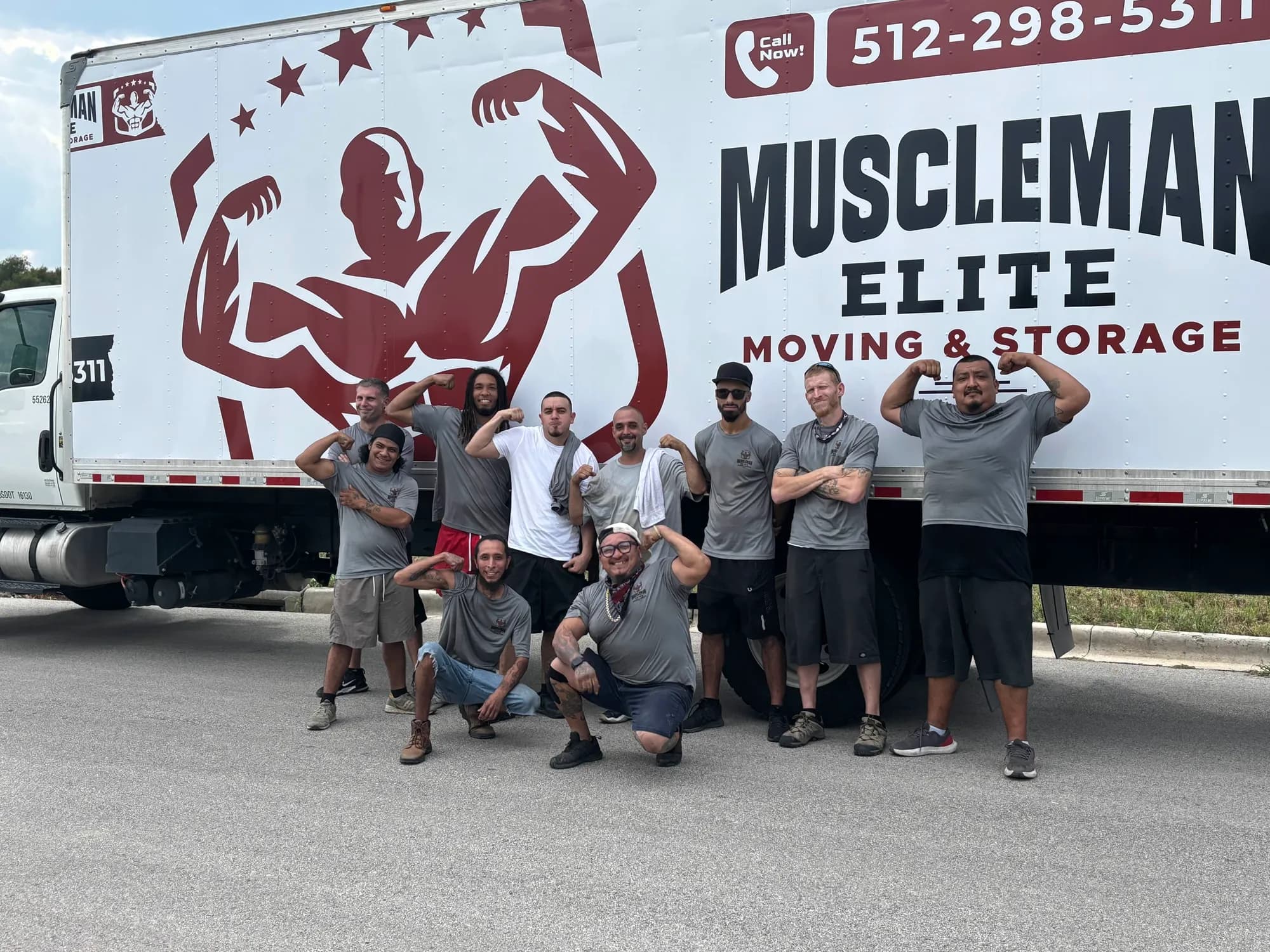
Muscleman Elite Move Planners11 min read
At a glance
8-12 days
Total Move Duration
~1,700 mi
Lane Distance
RMC
Cartus / Sirva / Aires
Binding
Estimate Standard
The short version
The Austin → Bay Area moving lane runs every week. Tech employees transferring to FAANG offices in Mountain View, Cupertino, Menlo Park, Palo Alto, and San Francisco proper. Founders moving for venture, family, or lifestyle reasons. Reverse-direction inbound from the Bay tightened the lane in 2018-2024; outbound from Austin has picked up since 2024 as some workers return to the Bay or move on to other markets.
This guide is the complete operational playbook for moving from Austin to anywhere in the Bay Area as a household, executive, or corporate-relo transferee. Cost ranges by household size, delivery timeline math, destination-building COI requirements, the corporate-relo paperwork cadence, what to expect on California arrival (CA DMV, vehicle smog, residency tax math), and the operational details of moving into a Bay Area building (parking permits, freight-elevator booking, HOA compliance).
Written by movers who run this lane every week — not a generic relocation overview.
In this guide
- 01What it costs — by household size
- 02The 8-12 day timeline, step by step
- 03Bay Area destination access — what to expect
- 04Cartus / Sirva / Aires Austin-to-Bay-Area files
- 05California arrival — residency, DMV, tax math
- 06What to ship vs what to leave behind
- 07Common Austin → Bay Area mistakes
- 08Bay Area → Austin: the inbound playbook
Cost
What it costs — by household size
Bay Area moves are quoted on the interstate tariff — weight-based, with adjustments for accessorial services (specialty handling, walk-up flights, valuation tier, etc.). Below are typical Austin → Bay Area cost ranges for self-financed moves at our standard quality (binding written estimate, FVP recommended, COI included).
1-bedroom (apartment, 2,000-3,500 lbs): $2,500 – $4,500. Includes binding estimate, FVP, basic packing supplies. Walk-up destination buildings add $300-$800 per additional flight beyond first.
2-bedroom (apartment or starter home, 4,000-6,500 lbs): $4,500 – $7,500. Includes FVP, COI at destination building if required. Storage in transit if needed adds $400-$900/month.
3-bedroom (family home, 7,000-11,000 lbs): $7,500 – $13,000. Standard family-tier scope. Specialty handling (piano, gun safe, hot tub) priced separately.
4-bedroom+ (larger family or executive household, 11,000-17,000 lbs): $13,000 – $22,000. White-glove tempo, full-house packing, multiple trucks.
5-bedroom + estate-tier (17,000-25,000+ lbs): $22,000 – $40,000+. White-glove standard. Art collection, antique inventory all factored in. Multi-day pack-out at origin, multi-day delivery at destination.
Corporate-relo via Cartus/Sirva/Aires: out-of-pocket to the employee is zero under most corporate-relo authorizations. The employer pays the RMC; the RMC pays the carrier. Costs are governed by the corporate tariff which is generally higher than the retail tariff (corporate FVP minimums are higher, RMC overhead is built in), but the employee doesn't see the line items.
Why ranges, not flat prices
Move pricing depends on actual weight (which depends on what you actually ship), destination access (Manhattan-style walk-up adds significantly), specialty items, and timing (peak summer adds 10-20% premium). Send us the address + scope and we send a binding written estimate within 24-48 hours.
Schedule
The 8-12 day timeline, step by step
An Austin → Bay Area move runs 8-12 days end-to-end for a typical family household. The breakdown:
Day 1-2: Origin pack. Crew arrives at the Austin address, packs the household. Inventory tagged item-by-item. Specialty items get specialty crating. Art and electronics get custom crates and foam padding. Pack day is 8-10 hours for a 2-3 bedroom household, 1-2 full days for 4-5 bedroom.
Day 3: Origin load. Furniture and boxes loaded onto the line-haul truck. Crew lead walks the property with the customer to confirm nothing is missed. Bill of Lading signed at origin with the inventory exception report attached.
Day 4-8: Transit. Line-haul truck drives ~1,700 miles to the Bay Area. Single-driver runs require federal-mandated rest stops; team-driver runs cut transit time. Estimated delivery date communicated to the customer.
Day 8-10: Destination delivery. Crew arrives during the delivery spread (typically a 2-3 day window). COI verified at the destination building if required. Furniture unloaded and placed per the floor plan. Customer signs BOL with any exceptions noted.
Day 11-12: Punch list. A small crew returns 48-72 hours after delivery for the inevitable "this monitor stand is missing a part" / "we need this dresser moved 6 inches" punch list. This is included on every Bay Area delivery; it's not an upsell.
Peak summer (June-August): add 2-3 days to the delivery spread. Lane congestion and crew availability tighten.
Holiday season (mid-November through New Year): add 3-5 days to the spread. Year-end Bay Area destination access is slower.
Destination
Bay Area destination access — what to expect
Bay Area destination access is tighter than typical Texas destinations. Plan for these scenarios:
San Francisco proper (94XXX zip codes). Most apartment buildings require COI naming building management. Freight elevator booking via the property's tenant app (typical 24-48 hour lead time). Parking permits sometimes required — call SF Municipal Transportation Agency (SFMTA) 72 hours ahead. Steep-grade streets in Russian Hill, Pacific Heights, Nob Hill may require shuttle truck (the 26-foot truck doesn't navigate some streets).
Palo Alto + Menlo Park (94XXX). Single-family homes typically straightforward; condos and townhouses may have HOA compliance. Stanford-adjacent apartments tighten during the August move-in cycle. COI standard.
Mountain View + Sunnyvale + Cupertino (94XXX-95XXX). Tech-corridor suburban. Most addresses are family-tier single-family homes with garage access. Apartment complexes near the FAANG campuses (especially during August lease-turn) book up freight elevators 2-3 weeks ahead.
San Jose (95XXX). Larger suburban footprint, easier access than SF proper. Family-tier residential typical.
Oakland + Berkeley (94XXX). Mixed residential. Older home stock in some neighborhoods has narrow streets + small driveways; shuttle truck sometimes required. UC Berkeley adjacent zones busy in August.
Marin County (94XXX). North-of-SF suburban. Steep-grade hillside addresses common — pre-scout required. Larger luxury single-family. White-glove tempo typical.
Manhattan-style walk-up exception
Some SF buildings (3rd-floor walk-ups in older neighborhoods like the Mission, the Castro, North Beach) charge per-flight carry fees on top of the line-haul. Pre-disclose the walk-up flights at booking; the estimate accounts for it. Some addresses we coordinate with a SF-based partner crew for the final carry so the long-haul team isn't doing the walk-up.
Corporate-relo
Cartus / Sirva / Aires Austin-to-Bay-Area files
Most Austin → Bay Area corporate-relo moves run through one of the major RMCs: Cartus, Sirva, Aires, Graebel. The cadence is consistent.
Authorization. Your RMC counselor authorizes the carrier after your HR/Mobility team confirms the relocation budget. Carrier selection comes from the RMC's approved list; you can request Muscleman Elite by name to your counselor.
Origin inspection. An origin inspector (sometimes the carrier's senior estimator, sometimes a contracted inspector) walks the Austin property to confirm inventory before the truck rolls. Documentation feeds into the file.
COI at destination. Most Bay Area buildings require COI naming the RMC + employer + building management. We file 24-48 hours ahead.
Full Value Protection at corporate standard. The RMC sets the FVP per-pound minimum (typically $6-8/lb for corporate tier vs $4/lb retail). No out-of-pocket to the employee.
Storage in transit. Common on Austin → Bay Area files when the lease transition doesn't align. 30/60/90-day SIT at the corporate tariff rate.
Delivery + destination inspection. Crew arrives during the delivery spread. Destination inspector confirms condition. Exceptions noted.
Post-move cost reconciliation. Carrier submits final invoicing to the RMC; the RMC reconciles and pays on net-30 or net-60 schedule. The employee receives copies of all documentation but doesn't pay anything directly.
After arrival
California arrival — residency, DMV, tax math
Once you arrive, California has its own residency-establishment cadence. Plan for these in the first 30-60 days.
California DMV. Establish California residency by getting a CA driver's license. Required within 10 days of establishing residency per CA Vehicle Code. Documents needed: proof of identity, Social Security number, proof of CA residency (lease, utility bill, mortgage). Allow 30-60 days for the new CA DL.
Vehicle registration + smog. California requires vehicle smog certification before registration for most vehicles 6+ years old. Smog inspection at a STAR-certified station ($60-$100). Then DMV registration ($60-$500+ depending on vehicle value + county fees). Required within 20 days of establishing residency.
State income tax. California has high state income tax (1%-13.3% progressive, with the top rate at $1M+ income). California residency for tax purposes starts the day you establish "domicile" — which the Franchise Tax Board interprets liberally. If you're moving mid-year, you'll file a part-year resident return for the move year. Talk to a CPA about timing — Texas-resident periods before the CA move are not subject to CA income tax.
Property tax. California's Proposition 13 caps property tax increases at 2% per year on a property's assessed value once you own it. New buyers pay tax on the purchase price for the first year, then the 2% cap kicks in. The math favors long-term owners but disadvantages new arrivals — your tax bill is higher than your neighbors who bought 10 years ago.
California renters insurance / homeowner insurance. Wildfire risk in many California zip codes has made homeowner insurance significantly more expensive — and in some areas, difficult to find at all. Renters in fire-zone-adjacent ZIP codes also face higher premiums. Confirm insurance availability + cost during the home-buying process, not after.
Voter registration. California voter registration is online via sos.ca.gov. 15-day deadline before any election.
“The Austin → Bay Area lane runs both directions every week. Customers riding the return leg of an existing rotation get scheduling priority and a price advantage.”
— Mike Stackable, Founder
Strategy
What to ship vs what to leave behind
Bay Area housing is dramatically smaller than Austin equivalents at the same household income. A typical 4-bedroom Austin family home (3,500 sq ft) often becomes a 2-3 bedroom Bay Area apartment (1,400-1,800 sq ft). Plan for downsizing.
Furniture worth shipping. Original-purchase mattresses + box springs (replacing them in CA costs $1,500-$3,500 per set), high-quality dining tables, leather sofas, custom-built or solid-wood pieces, art collections, family heirlooms.
Furniture worth selling or donating before the move. Cheaper IKEA pieces (shipping costs more than replacement), oversized sectionals that won't fit in a smaller space, mass-market dressers, exercise equipment you haven't used in months. Austin Craigslist + Facebook Marketplace move these fast.
Items you definitely should pack: Kitchen knives + cookware (replacing matched sets is expensive), books and media collections you genuinely use, electronics, all clothing, art and decor, kids' favorite toys.
Items not worth packing: Half-used cleaning supplies (FMCSA prohibits aerosols above certain volumes anyway), propane tanks (hazmat — won't be moved), opened pantry items (most expire mid-transit), plants (transit conditions stress them, and CA agricultural inspection may quarantine).
Firearms. California has stricter firearm laws than Texas. Some Texas-legal firearm configurations (high-capacity magazines, certain rifle features) are not legal to possess in California. Confirm your inventory with a CA Department of Justice firearms-eligibility check or a CA-based firearms attorney before transporting.
Avoid these
Common Austin → Bay Area mistakes
Underestimating walk-up flights. Bay Area apartment listings often don't clarify "3rd floor walk-up" until the lease is signed. By the time the truck arrives, the customer realizes there are 3 flights of carries on every box. Confirm building access at the lease-signing stage.
Skipping FVP. Released Value (60 cents/lb) on a 8,000-lb move pays out $4,800 maximum if everything is destroyed. A $2,000 TV pays $20. Full Value Protection is the right call for any meaningful household — pay the premium, get actual cash value or replacement.
Not pre-disclosing specialty items. Pianos, gun safes, hot tubs, antiques all need to be on the estimate at booking. Surprises on move day mean change orders, delays, sometimes refused service if hazmat is involved.
Trying to ship plants. Most plants die in transit. California also has agricultural inspections that may quarantine plant material at the state border. Donate or sell plants before the move.
Booking on price alone. The lowest bid on Austin → Bay Area is almost always a broker (not a carrier) that subcontracts to whichever van line is cheapest that week. Carriers like Muscleman Elite quote slightly higher but deliver consistent quality. The 10-20% bid-difference is real protection.
Not setting up California utilities before delivery. Pacific Gas & Electric (PG&E) takes 5-10 business days to activate service at a new address. Coordinate with the property manager during the lease-signing window so power and water are live when you arrive.
Forgetting the California Air Resources Board (CARB) cleaner-air requirements. Some Texas-purchased gas-powered equipment (lawnmowers, generators) is not legal to operate in California's Bay Area air-quality district. Confirm or sell before the move.
Other direction
Bay Area → Austin: the inbound playbook
Plenty of households make the reverse move — Bay Area to Austin. The lane is the same; the operational considerations flip.
Why people move this direction. Texas has no state income tax, lower cost of living, and an active tech/finance employment market. The Austin metro grew ~33% in metro headcount between 2018 and 2024, much of it from Bay Area + NYC + Chicago inbound.
Austin destination access is much easier than Bay Area destinations on the whole. Suburban single-family destinations (Round Rock, Cedar Park, Pflugerville, Leander, Georgetown) have standard driveway access. Westlake / Tarrytown / Barton Creek may have HOA compliance + occasional canopy clearance issues, but rarely Manhattan-style walk-ups.
Tax math reversed. California state income tax stops accruing the day you establish Texas residency. The savings on a $200K-$500K salary are typically $15K-$50K annually. Property tax is higher in Texas, but homestead exemption ($40K assessed value reduction for owner-occupied) helps.
The 2024-2025 reversal. Tech-sector cooling drove some Bay Area → Austin inbound back to other markets including Bay Area returns. We run the lane both directions every week. Return-leg pricing advantages possible.
Inbound family-school cycle. Same school-year peak timing as Permian families: mid-June through mid-August move-in to align with August school start dates. Round Rock ISD, Eanes ISD, Leander ISD, Pflugerville ISD all peak this window.
Common questions
On this topic.
- How much does an Austin to Bay Area move cost?
- Depends on household size. 1-bedroom apartment ~$2,500-$4,500. 2-bedroom ~$4,500-$7,500. 3-bedroom family home ~$7,500-$13,000. 4-bedroom+ ~$13,000-$22,000. Estate-tier 5-bedroom+ ~$22,000-$40,000+. Corporate-relo via Cartus/Sirva/Aires has zero out-of-pocket to the employee.
- How long does the move take?
- Typical timeline: 1-2 days origin pack + 1 day origin load + 4-6 days transit + 2-3 day delivery spread + 1-2 days punch list = 8-12 days end-to-end. Peak summer adds 2-3 days. Holiday season adds 3-5 days.
- Do I need a COI at my Bay Area destination?
- Most apartment buildings in SF, Palo Alto, Menlo Park, and Mountain View require one. Single-family suburban destinations typically do not. The estimator confirms requirements at the walk-through and files the COI 24-48 hours ahead.
- What about firearms?
- California has stricter firearm laws than Texas — some Texas-legal configurations are not legal in California. Confirm with a CA firearms-eligibility check before the move.
- Should I downsize before the move?
- Yes — Bay Area housing is significantly smaller than Austin equivalents at the same income tier. A 4-bedroom Austin home often becomes a 2-3 bedroom Bay Area apartment. Sell or donate IKEA pieces, oversized sectionals, and exercise equipment before the move; ship the high-quality items.
- Can I store my stuff if my Bay Area lease starts late?
- 30/60/90-day storage in transit is standard. Climate-controlled, on the same crew rotation, no second move-out fee. Common when the lease transition doesn't align with the move date.
Ready to plan your move?
Tell us the date.
Send your Austin origin + Bay Area destination, household scope, target window, and corporate-relo administrator if applicable. Binding written estimate within 24-48 hours. Active weekly lane, RMC-approved carrier, COI handled at destination. Licensed: USDOT 2105156 · TxDMV 006568203C.