Lane distance + line-haul cost.
Cross-country lanes (Austin → CA, NY, Seattle) cost more per pound than mid-distance (Austin → Denver, Phoenix, OKC). Florida and Tennessee are mid-distance lanes. We quote against the published interstate tariff.
AUSTIN LONG-DISTANCE · CA · NY · CO · WA · FL · OUTBOUND + INBOUND
Austin → Bay Area, Denver, Seattle, NYC, South Florida. Inbound the same. Tech transfers, family relocations, executive corporate-relo. We run these lanes every week.
Why Austin clients book us
8-12 days
AUS → Bay Area
14 days
AUS → NYC Metro
8 days
AUS → Denver
RMC
Approved Carrier
Austin reality
Austin long-distance moves split roughly into three categories: outbound tech-and-talent moves (Austin → Bay Area, Seattle, Boston, NYC; people leaving for FAANG offices or established tech hubs), inbound boom moves (Bay Area, NYC, LA, Chicago → Austin; people moving here for tech jobs, no-state-income-tax, or family reasons), and the Florida lane (Austin ↔ Tampa, Naples, Miami, Jacksonville; retirement, family, and the post-2020 "Texas-Florida" flow).
The inbound flow has been larger than outbound since 2020 — Austin grew by ~33% of metro headcount between 2018 and 2024. But the outbound flow has accelerated since 2024 as some tech workers leave Austin for hometowns or for "less Austin" markets. Our truck rotation supports both directions: most weeks we have outbound trucks pre-routed to California, Denver, Seattle, Florida — and inbound trucks coming back from those same markets. Customers riding the return leg of an existing rotation get scheduling priority and often a price advantage.
The corporate-relo lane is a separate segment — Cartus, Sirva, Aires, Graebel, NEI Global, Weichert. Austin-based companies (Indeed, Meta, Tesla, Oracle's Austin satellite, dozens of mid-size tech and finance employers) move employees in and out on third-party-paid programs. We are on the carrier list for the major RMCs and handle the documentation cadence the corporate-relo file requires.
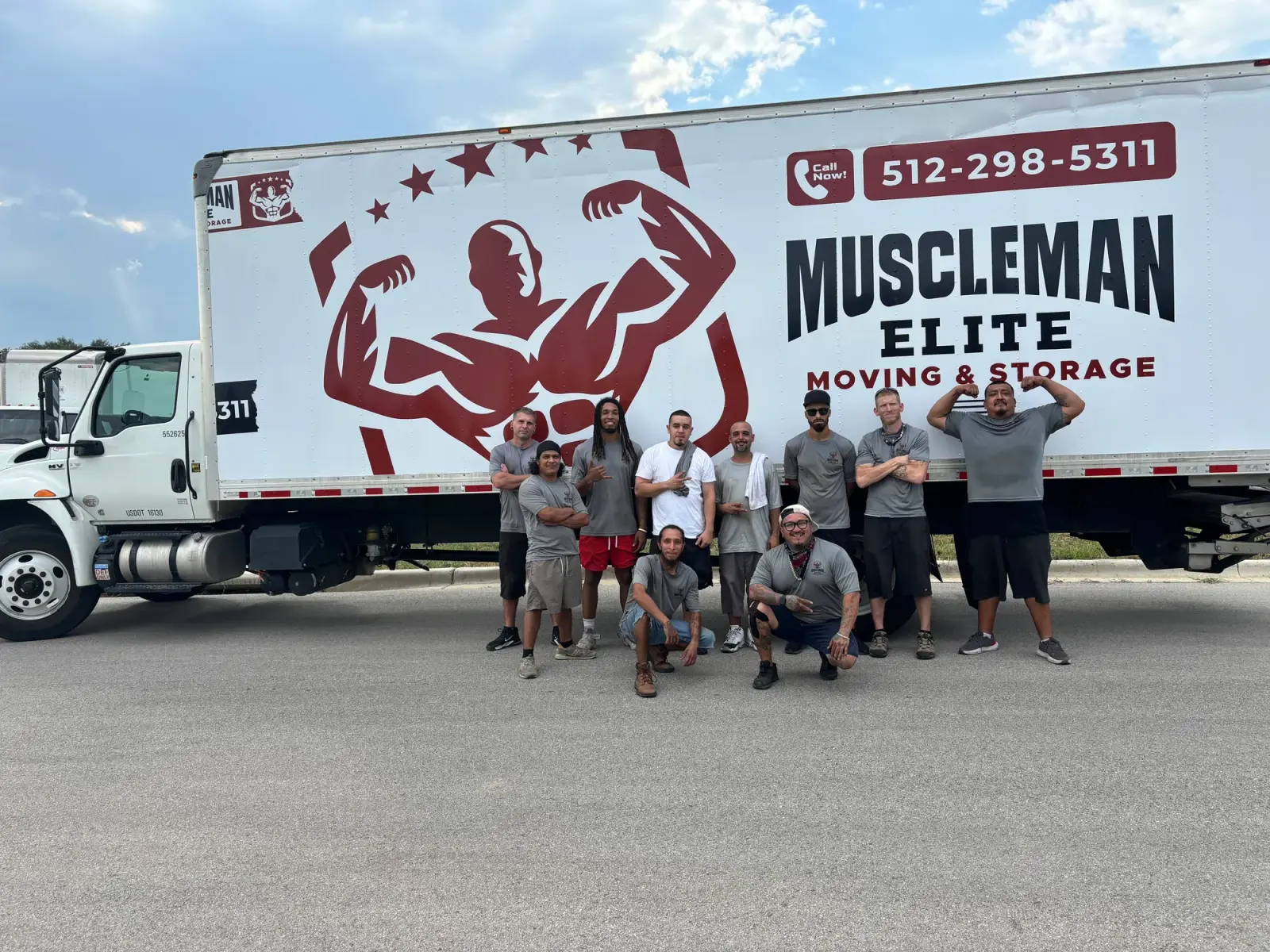
Why this market is different
Austin → Bay Area / Seattle is a hub-to-hub lane. We can quote it tight, run it consistently, and deliver in the 7-12 day window typical of cross-country moves. Bay Area destinations require COIs at most apartment buildings and condo complexes (the corporate-relo carriers expect it). We pre-file.
Austin → New York metro is a hub-to-tight-access lane. Manhattan delivery means COI, building-management coordination, freight-elevator booking, weekend-only window. Brooklyn / Queens delivery typically means narrow streets, walk-up carries, parking permits. We run a shuttle truck rotation into the city; sometimes we coordinate with a Manhattan-based partner crew for the final delivery so the long-haul team isn't doing the walk-up.
Austin ↔ Denver corridor is one of the highest-volume lanes. Tech transfer (Austin's tech wave brought Denver people here; the cooling sent some back), family relocation, executive relo. The drive is ~14 hours through the Texas Panhandle and northern New Mexico — dust season hazards in winter, occasional summer storms. Two-day move is standard.
Austin ↔ Florida is the snowbird-and-retirement lane. Tampa, Naples, Sarasota, Jacksonville inbound; Texas-to-Florida flow runs steady. White-glove service is more common on this lane — older clientele with curated possessions, antique furniture, fine art, family heirlooms. We've handled multi-generational household consolidations where four Austin homes (parents, grandparents, in-laws) moved to a single Florida estate.
The corporate-relo file structure changes everything. Cartus, Sirva, Aires authorization means: written estimate matching the corporate tariff, COI naming the RMC and the employer as additional insured, Full Value Protection at the corporate standard, origin and destination inspection support, 30-to-90-day storage in transit, post-move cost reconciliation. We file every step in the RMC's portal cadence.
“Customers riding the return leg of an existing rotation get scheduling priority and a price advantage. The Austin–Bay Area lane runs both directions every week.”
— Mike Stackable, Founder
Our local process
Estimate first. We send an in-home estimator (or virtual walk-through for smaller moves) for any long-distance scope. The estimate gives you a binding price, a delivery spread (typically 1-3 days for nearby states, 5-14 days for cross-country), and a Full Value Protection tier recommendation. We do not quote long-distance over the phone.
Pre-move (2-4 weeks ahead): binding written estimate signed, FVP confirmed, COI filed (if needed at destination building), storage-in-transit planned (if needed), corporate-relo paperwork lodged with the RMC (if applicable). Crew sized to the scope and lane.
Packing day(s). Long-distance moves take packing seriously — the contents will move through more handling events than a local move. We pack the household (or you can PBO certain rooms; the BOL identifies PBO cartons). Inventory tagged item-by-item. Each box numbered against the inventory list.
Origin load. 1-2 days for typical 3-4 bedroom households. Inventory exception report on origin; contents loaded onto the line-haul truck or onto a shuttle that meets the line-haul at our staging yard.
Transit. The line-haul truck runs the lane. Estimated delivery date communicated in advance. The customer can call dispatch for in-transit status anytime.
Destination delivery. Crew arrives during the delivery spread. COI filed if required by the destination building. Unloaded into the destination home, placed in rooms per the inventory, inventory exception report at destination. Customer signs the BOL with any exceptions noted.
Post-move. Claims handled if exceptions noted. Follow-up walk-through within 48-72 hours if local crew (some out-of-state destinations require remote claims handling).
Local pricing factors
Pricing depends on the move. Specific to Austin — these are the levers we weigh when we write the estimate.
Cross-country lanes (Austin → CA, NY, Seattle) cost more per pound than mid-distance (Austin → Denver, Phoenix, OKC). Florida and Tennessee are mid-distance lanes. We quote against the published interstate tariff.
Long-distance moves charge by weight (interstate tariff) or by volume (some company-paid moves). The estimate identifies which applies. Heavier households cost more; downsized moves (couples, retirees, students) cost less.
Full Value Protection (recommended for all long-distance moves with valuable contents) costs more than the basic Released Value Protection (60 cents/lb). The recommendation matches your contents value. See /glossary/full-value-protection.
30/60/90-day SIT for cross-country moves where the closing date at destination lags the move date. Standard pricing in the corporate-relo tariff; out-of-pocket adds a daily storage fee.
Manhattan, San Francisco, Seattle Capitol Hill, Brooklyn — tight-access destinations add shuttle, permit, and walk-up charges that show up on the estimate. Suburban deliveries are straightforward.
Long-distance estimates are binding (or non-binding-not-to-exceed when requested). We do not change the price after the BOL signs. Any change to scope (additional rooms, additional items, accessorial services) is discussed and approved before the work happens.
Common scenarios
5-day pack, Friday load, Tuesday delivery. FVP, COI at Palo Alto property management, padded and secured transport, two-day delivery window. Cartus invoicing, employee out-of-pocket zero.
Family home + home-office gear + founder's vintage HiFi system. Self-financed move (not corporate). 8-day window, white-glove on the HiFi. Destination Tarrytown.
Two Austin households (couple's primary + their adult child's former apartment) consolidated into a Florida estate. 14-day delivery spread. Antique furniture and fine art handled white-glove. Some items in 60-day SIT until the FL closing.
2-bedroom apartment. Shuttle to a Brooklyn destination. Walk-up to a 5th-floor apartment, parking permit obtained 72 hours ahead, weekend window. We coordinated with a Brooklyn partner crew for the final carry.
3-bedroom Lakewood, CO → North Austin (Domain area, leased townhouse). Sirva authorization, COI at the townhouse management, FVP, 5-day delivery spread.
Where we run this in Austin
Tech founders + executives often outbound from this corridor to Bay Area, Seattle, Boston. Established households, high-value contents.
High concentration of corporate-relo files. Cartus, Sirva, Aires authorizations into and out of this corridor regularly.
Inbound destination for tech-employee relocation. Apartment + leased-townhouse + corporate-relo SIT common.
Younger inbound demographic — Bay Area / NYC tech, no-kids, urban preference. Adaptive-reuse loft deliveries.
Family destination for inbound corporate-relo. Schools-driven choice; standard suburban delivery.
Suburban inbound from out-of-state. Outbound to other Texas-major metros (DFW, Houston) and back to West Coast hometowns.
Related pages
Other services in Austin
Austin — more
Questions we get
Austin move?
Send the destination city, target move date, household size (bedroom count + special items), and your corporate-relo administrator if applicable. Binding written estimate within 24-48 hours. Active lanes: Bay Area, Denver, Seattle, NYC metro, South Florida, Pacific Northwest, Phoenix, OKC, DFW, Houston, Chicago, Boston, every other Texas-major metro. Licensed: USDOT 2105156 · TxDMV 006568203C.